Pull two market reports for the West Village covering the same stretch of this year and you get two different neighborhoods. One shows price per square foot down 3.4 percent year over year as of May 2026. Another, covering the three months ending that same May, shows price per square foot up 33.9 percent over the same period a year earlier. Same blocks. Same month. Opposite direction.
This is not a data error, and it is not a case of picking the "right" source. It is what happens when a neighborhood this small, this restricted, and this structurally split gets described with a single number. The West Village does not have one housing market. It has three, running at different prices and different speeds, and every headline median is really just whichever mix of those three markets happened to close that month.
If you are comparing the West Village against other neighborhoods on your list, the number that matters is not the median. It is which of the three markets your budget actually competes in.
A Sample Size You Can Count on Two Hands, Twice
Start with how few transactions this neighborhood actually produces. One data provider counted 32 closed sales in the West Village in May 2026. Another counted 66 sales for that same month, down from 72 a year earlier. Even the basic question of how many homes traded hands does not have one answer, because different services draw the neighborhood boundary differently and include different property types in the count.
Either number is small enough that a single unusual transaction distorts everything downstream of it. In a neighborhood where the median condo, in Manhattan overall, is built from thousands of closings a year, one $85 million penthouse barely moves the needle. In a market closing somewhere between 24 and 66 homes a month, it can flip the median by itself.
Why the Supply Never Catches Up
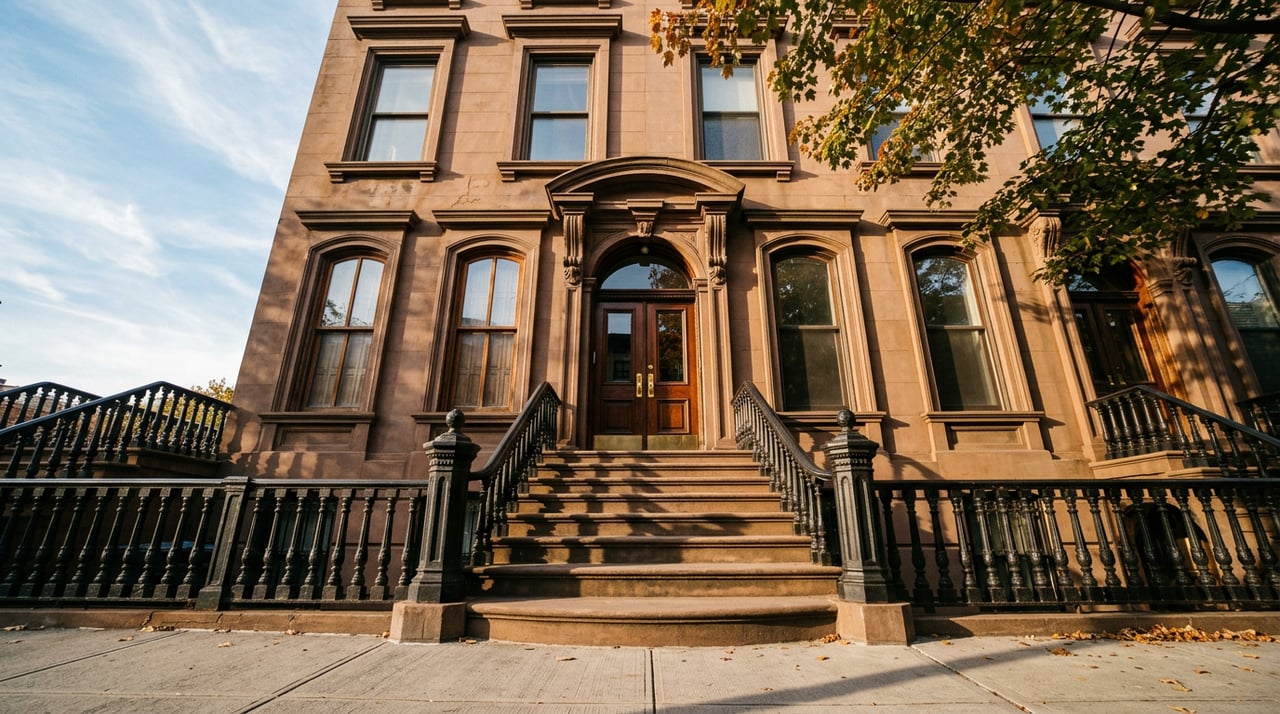
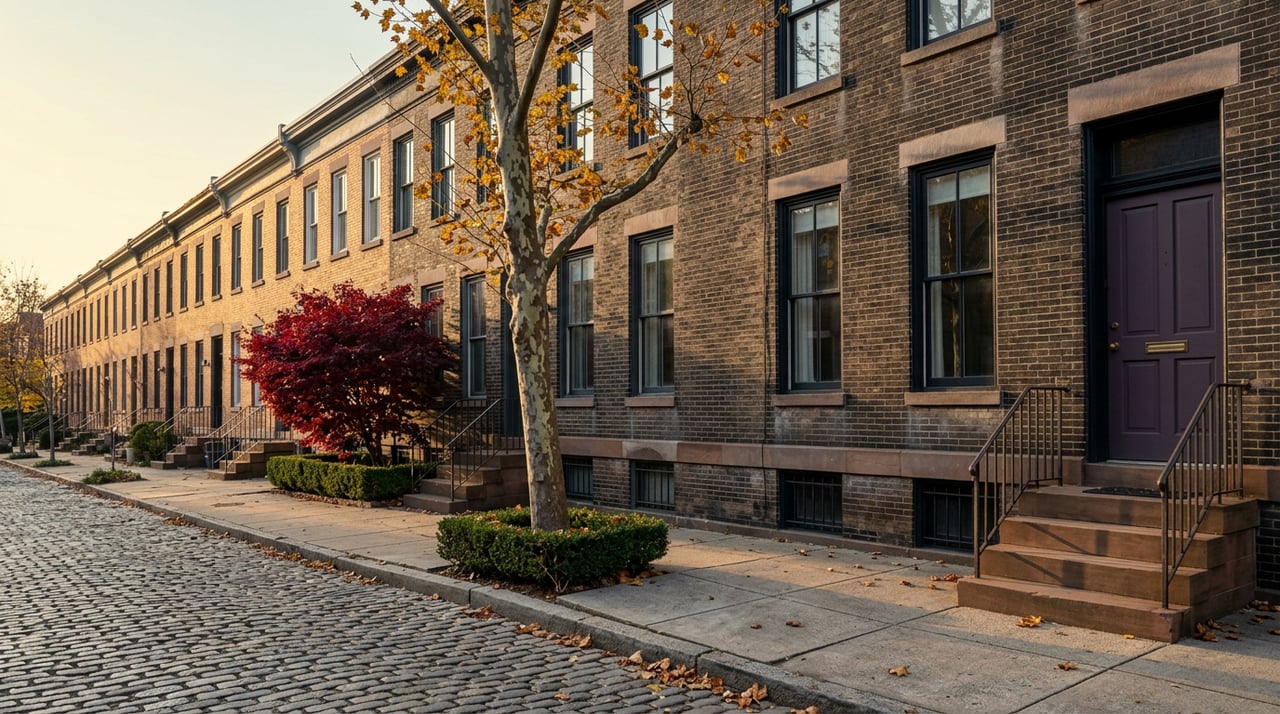
The reason the sample stays this thin is structural, not cyclical. Roughly 80 percent of the West Village sits inside a historic district, which means new condominium construction at any real scale is effectively off the table. There is no pipeline of new towers coming to dilute the mix or add volume in a slow month. What exists now is close to what will exist next year: a fixed stock of prewar co-ops, a small pool of converted or newer condo buildings, and close to 1,000 protected townhouses on blocks like Bank, Bethune, Charles, Bedford, Commerce, Grove, and Perry Streets.
That fixed stock means every sale carries more statistical weight than it would in a neighborhood where builders can respond to demand. When a rare inventory type comes to market, it does not get absorbed into a larger pool. It becomes the headline.
Three Markets Wearing One Name
Break out May 2026 by property type and the contradiction stops looking like noise and starts looking like three separate stories:
- Co-ops: median sale price of $825,000, down 28.8 percent year over year
- Condos: median sale price of $4.3 million, up 16.9 percent year over year
- Houses (townhouses): median sale price of $70 million, up 438.5 percent year over year
Read across those three lines and you can see exactly what a blended "West Village median" is doing. It is averaging a starter co-op market against a scarce, appreciating condo market against a townhouse category so thin that a single sale can swing its reported median by hundreds of percentage points in either direction.
The co-op side is also where most of the actual inventory sits. In a mid-2026 market snapshot, co-ops made up 61 percent of active listings in the neighborhood, against a backdrop of roughly 109 total listings and about 5.7 months of supply, a level generally read as a balanced market rather than a hot or cold one. That is the quiet majority of the neighborhood that headline "West Village is up" or "West Village is cooling" stories rarely mention, because co-op sales are numerous enough to be unremarkable and condo and townhouse sales are rare enough to be newsworthy.
The Deals Doing the Moving
The townhouse number is worth sitting with, because 438.5 percent is not a market trend. It is arithmetic. A handful of named transactions this year illustrate exactly how a category with only a few annual sales gets reset by whoever happens to close.
A combined pair of townhouses at 105-107 Bank Street, designed by Robert A.M. Stern Architects at six stories and more than 13,000 square feet, entered contract for more than $70 million, a deal that would rank among the most expensive homes ever sold in downtown Manhattan if it closes at that price, according to 6sqft. Separately, a new condo development at 80 Clarkson Street from Zeckendorf Development and Atlas Capital Group had a $129 million contract signed, which would make it the most expensive deal below 14th Street, surpassing a $72.5 million Greenwich Village townhouse sale from 2024. A penthouse at 125 Perry Street is asking $85 million.
None of these are typical transactions. They are exactly the kind of outlier that a thin sample cannot absorb. Peter Zaitzeff, a Serhant broker who tracks Manhattan condo pricing, described the West Village pricing environment plainly this summer, telling The Real Deal it's "insane" after recently inking a $10,000-per-square-foot deal in the neighborhood. That single deal alone, if it landed in a slow month, would be enough to bend a median calculated from a few dozen closings.
What This Actually Means If You're Comparing Neighborhoods
The practical version of all this is simple. Stop asking what the West Village median is. Ask which of the three markets your number actually competes in.
If your budget lands near or below $1 million, you are shopping the co-op market, where 61 percent of the active inventory sits, where the May 2026 median sat at $825,000, and where board approval timelines and building financials matter more than the neighborhood-wide headline. A year-over-year drop of nearly 29 percent in that segment reflects fewer high-end co-op sales pulling the number down, not a neighborhood in decline.
If your budget lands in the low millions, you are shopping condos, a category with almost no new supply because of the historic district, where the May 2026 median of $4.3 million rose 16.9 percent year over year even as the broader "West Village" headline looked mixed depending on which source you read.
If your budget clears eight figures, you are not shopping a neighborhood median at all. You are shopping a specific handful of the roughly 1,000 protected townhouses that exist on named blocks like Bank, Bethune, Charles, and Perry, competing against whichever comparable house happened to trade last, whether that was a $70 million combined property or a $30 million single-family sale.
Knowing which market you are actually in changes what a listing agent's asking price should tell you, and it changes what a "cooling" or "hot" headline about the neighborhood is worth to your search.
Frequently Asked Questions
Why did the co-op median drop nearly 29 percent in a year if the neighborhood is supposed to be strong? Because co-op sales are the most numerous transaction type in the West Village, a shift in which price tiers of co-ops happened to sell in a given month moves that median more visibly than it would in a larger market. A lower median does not necessarily mean lower comparable prices for a specific apartment, it can mean fewer high-end co-op sales closed relative to more modest ones.
Does the historic district designation affect what I can do with a property once I own it? Roughly 80 percent of the neighborhood sits inside a historic district, which restricts new construction and shapes what can be built or altered externally on existing buildings. Any buyer planning exterior work should confirm a specific property's landmark status and review applicable requirements before making assumptions about renovation scope.
Is the West Village actually getting more expensive right now, or cooling off? Both descriptions are technically true depending on which sub-market you isolate. Condos and price per square foot on some measures were up double digits year over year as of mid-2026, while the co-op median was down sharply over the same period. The honest answer is that it depends entirely on which of the three markets inside the neighborhood you are asking about.
Numbers like these are exactly why a neighborhood-level headline is the wrong tool for pricing a specific search. If you are weighing the West Village against other downtown neighborhoods and want a read on which of its three markets actually fits your budget and goals, the Greg Mire Team can walk through the current inventory with you and request a confidential consultation built around the numbers that apply to your search, not the ones making headlines.