Why does one block of Brooklyn Heights change faster than almost anything else in the neighborhood, while the structure a few blocks away moves on a timeline measured in generations?
Walk west on Atlantic Avenue from the Promenade this month and you'll pass three storefronts that didn't exist under their current names a year ago, on a stretch that had been stable for over a decade. Walk the other direction, out onto the Promenade itself, and you're standing on top of an expressway that a city-appointed panel once warned could become unsafe for travel this very year, and that City Hall just proposed keeping in place until 2080. Both things are true right now, in the same ten-minute walk. That contrast, not any single opening or announcement, is what actually changed in Brooklyn Heights this fall.
Four Storefronts, One Winter
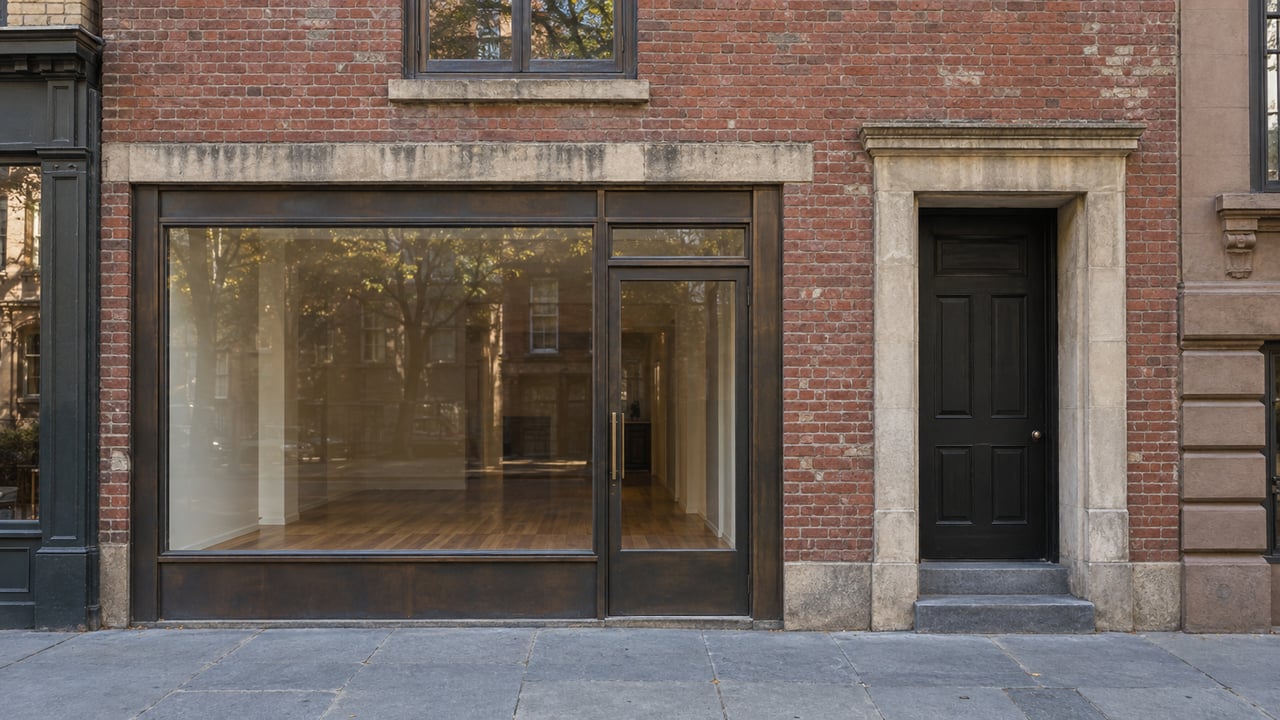
The corner of Atlantic and Henry has belonged to Colonie for almost 14 years, long enough that most residents never thought about the address without the name attached to it. Colonie closed on Atlantic Avenue after that run, along with the wine bar Pips two doors down, part of a stretch of closures that also swept up Hildur and Clover Hill nearby. By February, the Colonie space at 127 Atlantic reopened as Confidant, brought by chefs Brendan Kelley and Dan Grossman, who had spent barely eight months running their first location in Industry City before relocating the entire operation, kitchen team included, to Brooklyn Heights. The banquette along the main wall is original to Colonie. The prawn pot pie that's already drawing crowds is new.
Two doors down at 129 Atlantic, the former Pips space is becoming Lou & Bev's, an all-day bakery and pizza spot from the same Confidant team. Around the corner at 107 Atlantic, Empanada City is opening in a storefront that sat empty through the spring. On Hicks Street, the old Fatoosh Pitza & Grill space has become Diljān, an Afghan bakery. None of these four addresses is unusual on its own. What's unusual is that they all turned over inside the same twelve months, on streets that typically see this kind of change spread across five or six years.
The traffic isn't running only one direction. Ingas Bar, a longstanding Brooklyn Heights restaurant, is opening a sister location in Boerum Hill in the former Café Kitsuné space, with an adjacent bar on Bond Street to follow. A neighborhood that spent years watching its favorite kitchens get poached by bigger footprint operators elsewhere in Brooklyn is now exporting its own.
The Streets Get Quiet on Purpose
None of that storefront churn happens in a vacuum. Montague Street, the commercial spine that connects the Promenade to the rest of the neighborhood, goes car-free for seven consecutive Sundays this fall, from September 13 through October 25, with a different reason to show up each week:
- September 13: the Back-to-School Party, with kids' activities, crafts, and face painting on car-free Montague
- September 20: the FAD Market, bringing more than 50 independent makers to the street from noon to 6pm
- September 27: a community tag sale
- October 4: the Feast of St. Francis animal blessing at 1pm outside St. Ann & the Holy Trinity at 157 Montague
- October 11: a square dance jamboree presented with Jalopy Theatre, with callers teaching the steps
That same September 27 Sunday is also Atlantic Antic, one of Brooklyn's oldest street fairs, running over ten blocks of Atlantic Avenue from Fourth Avenue to the waterfront and passing directly in front of the new Confidant and Lou & Bev's storefronts. On October 17, Brooklyn Bridge Park closes its season with the Harvest Festival at Pier 6. On October 31, the Brooklyn Heights Association runs its annual Halloween Parade, stepping off at 10:30am from the Promenade's north end.
The Brooklyn Heights Association organizing that parade isn't a recent civic startup. It held its 116th annual meeting this past March, a detail worth sitting with given how much of this fall's programming, from the Halloween Parade to ongoing advocacy on the highway below, still runs through the same organization.
The Argument Under the Promenade
The Promenade sits on top of the BQE's triple cantilever, a 1950s-era structure that carries roughly 130,000 vehicles a day underneath the neighborhood's most photographed piece of public space. In 2020, an expert panel convened under the de Blasio administration warned the cantilever could become unsafe for travel as early as 2026. That's this year.
Nothing close to that has happened, and the reason traces back through several years of stalled federal funding. In January 2024, the Federal Highway Administration rejected the city's application for roughly $800 million in grants to fund a full reconstruction, a rejection that pushed the earliest possible start date for major work to 2028. By November 2025, the Adams administration's plans to move forward on its own were shelved entirely.
Then in August 2026, the Mamdani administration put forward something different: a roughly $4 billion plan to rehabilitate rather than fully replace the triple cantilever, over a projected 10-year construction window. The plan calls for a temporary bypass along Furman Street, not on top of the Promenade itself, running only as high as the upper Queens-bound platform of the existing structure and about 28 feet wide, widening to roughly 40 feet near the Atlantic Avenue on-ramp. That detail matters to anyone who remembers the 2018 version of this fight, when the de Blasio-era DOT proposed routing a temporary six-lane highway directly across the Promenade, a plan community opposition killed before it went anywhere.
Council Member Lincoln Restler, whose district includes Brooklyn Heights, called the shift toward rehabilitation encouraging in a statement following the August announcement, while noting the plan is only the start of what he described as a multi-year approval process still carrying open questions. In the meantime, the DOT has been keeping the structure standing with roughly $174 million in interim repairs, including steel mesh installed under the cantilever to catch loose concrete before it reaches the roadway below, and automated sensors now enforcing weight limits against the overweight trucks that make up more than one in ten vehicles crossing the span.
If the current plan holds, the structure a city panel once flagged as a 2026 safety risk would remain standing, under active reconstruction, until sometime around 2080.
Two Clocks, One Neighborhood
A single block of Atlantic Avenue turned over four storefronts in about a year. The infrastructure underneath the Promenade, three blocks away, is now on a public timeline that runs more than five decades past the year it was once flagged as potentially unsafe. Both are real, and both are visible from the same walk down the same set of blocks this fall.
What that means day to day is fairly concrete. The bypass, when it eventually arrives, is planned for Furman Street rather than across the Promenade, so the daily experience of walking the esplanade itself is not the piece of this story likely to change soon. The interim repairs mean the highway noise, the truck weight limits, and the steel mesh underneath are the version of the BQE residents will live with for at least the next several years, regardless of which mayoral administration is making announcements. Meanwhile, Montague's seven car-free Sundays give the clearest available preview of what that same corridor sounds like without through traffic, one Sunday at a time, through October 25.
Confidant's owners described the old Colonie space as feeling like their own living room from the moment they walked in. Whether that block still feels that way in another 14 years depends less on the restaurants than on a highway rebuild that, as of this fall, is still measured in decades rather than seasons.
If the pace of change on Atlantic Avenue and the pace of the highway decision below the Promenade have you thinking about the neighborhood's next chapter rather than its next Sunday market, the Greg Mire Team is available for a confidential conversation grounded in what's actually happening on these blocks, not the headlines about them.