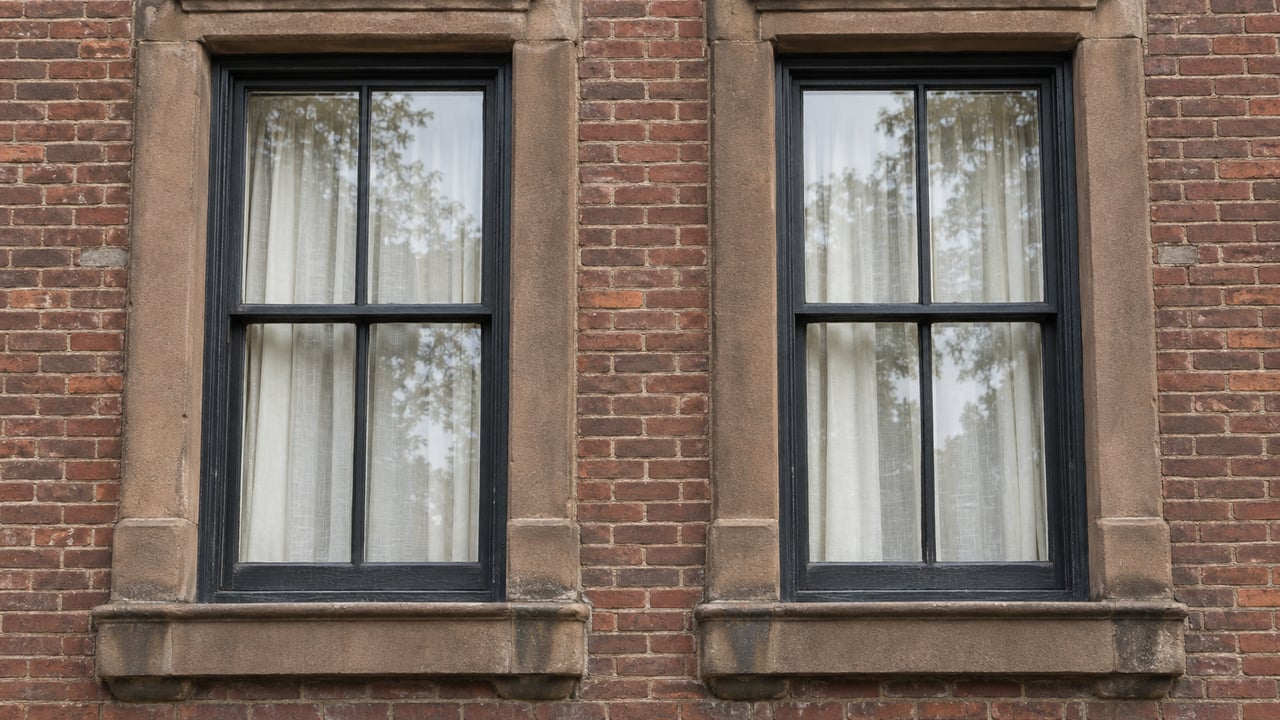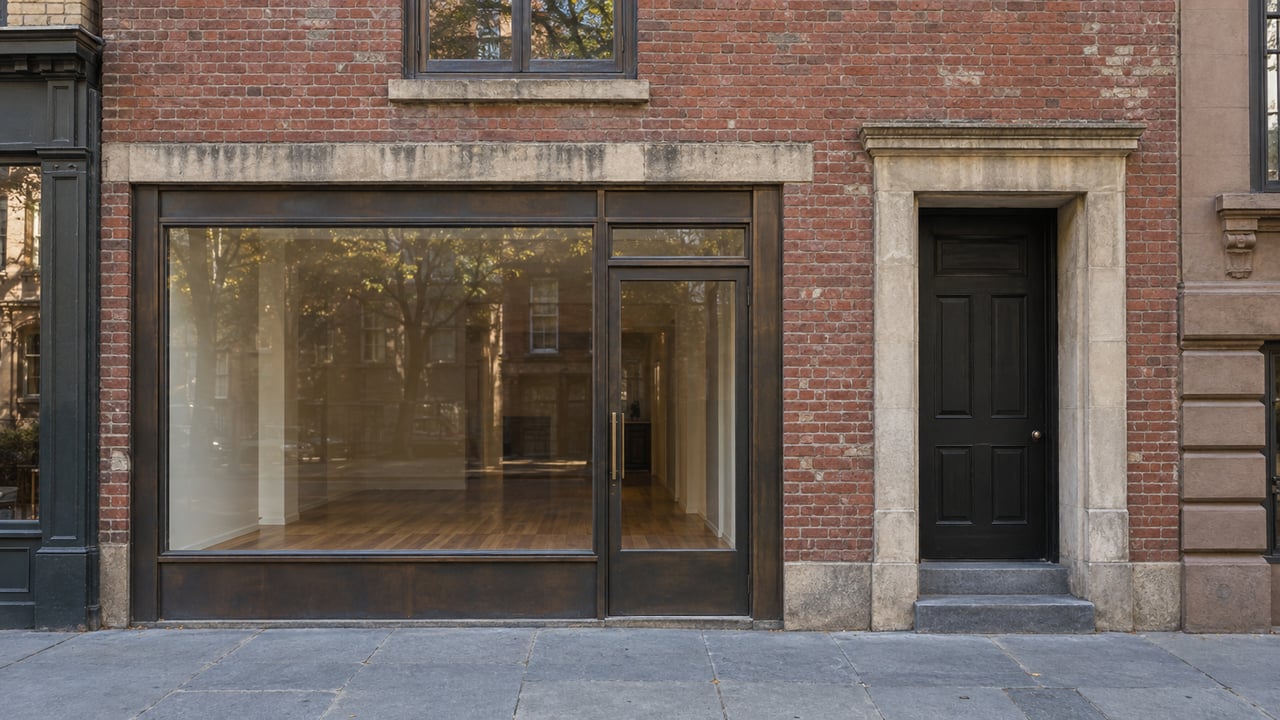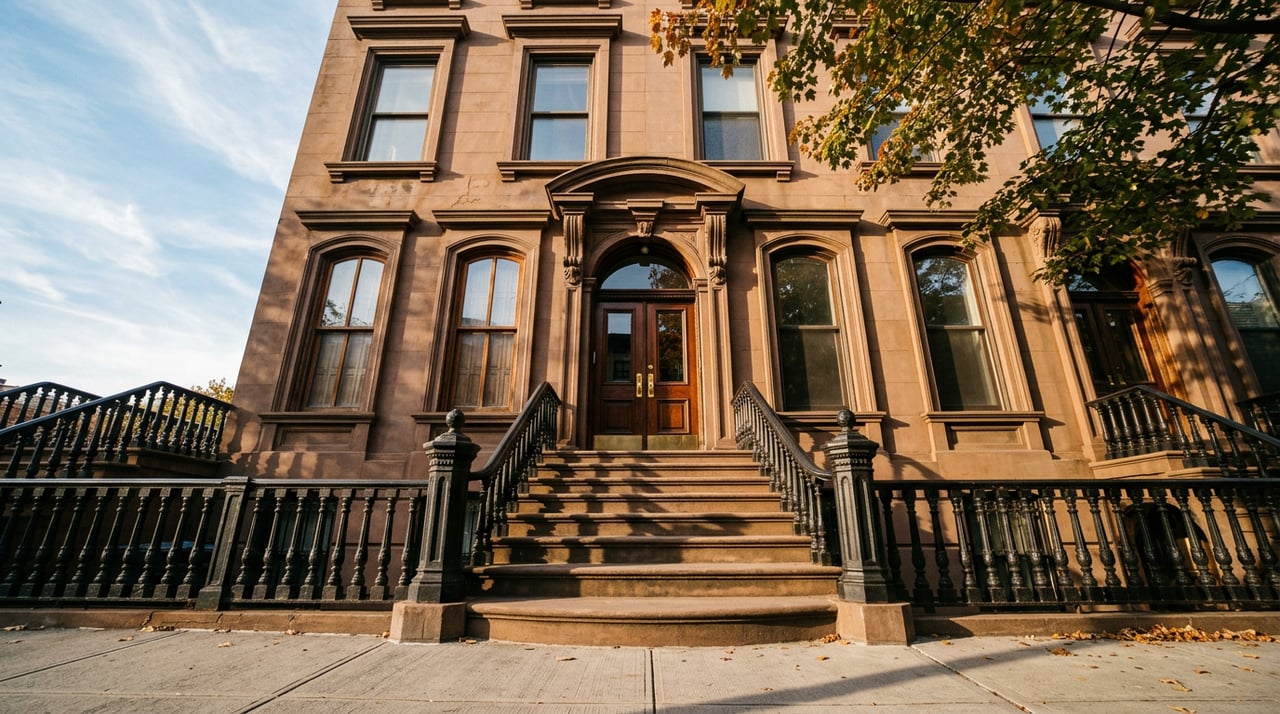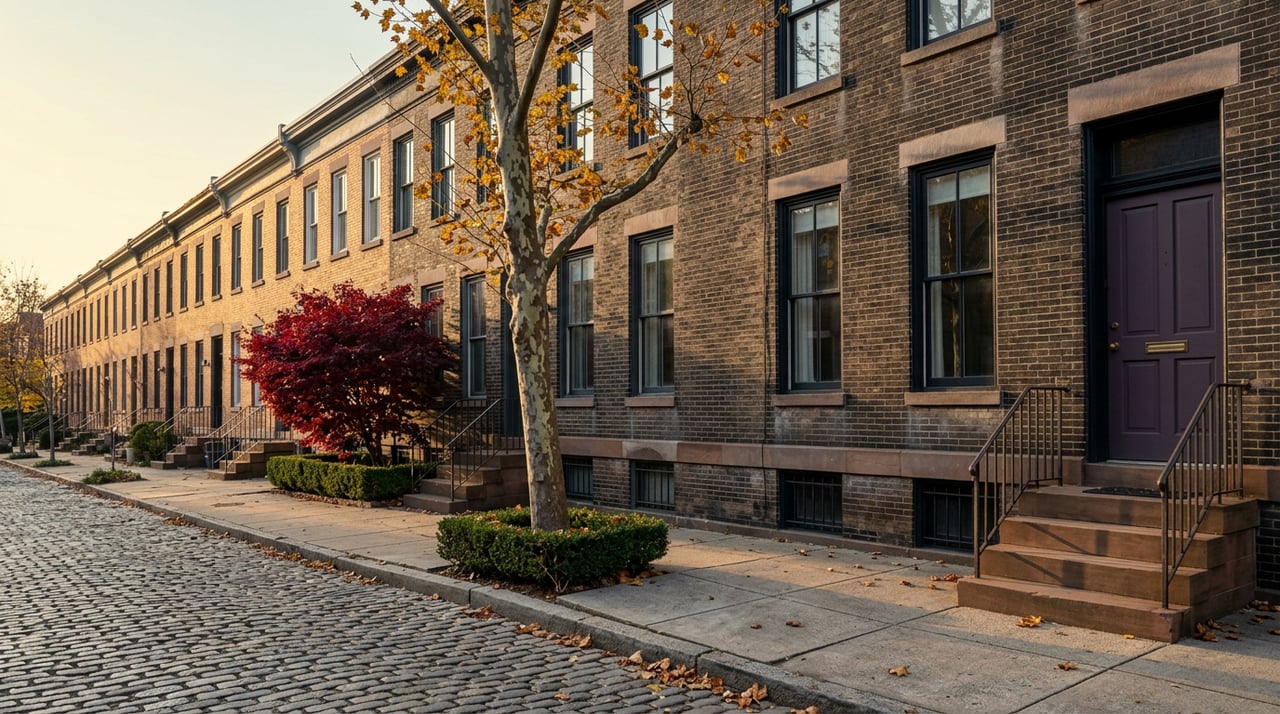
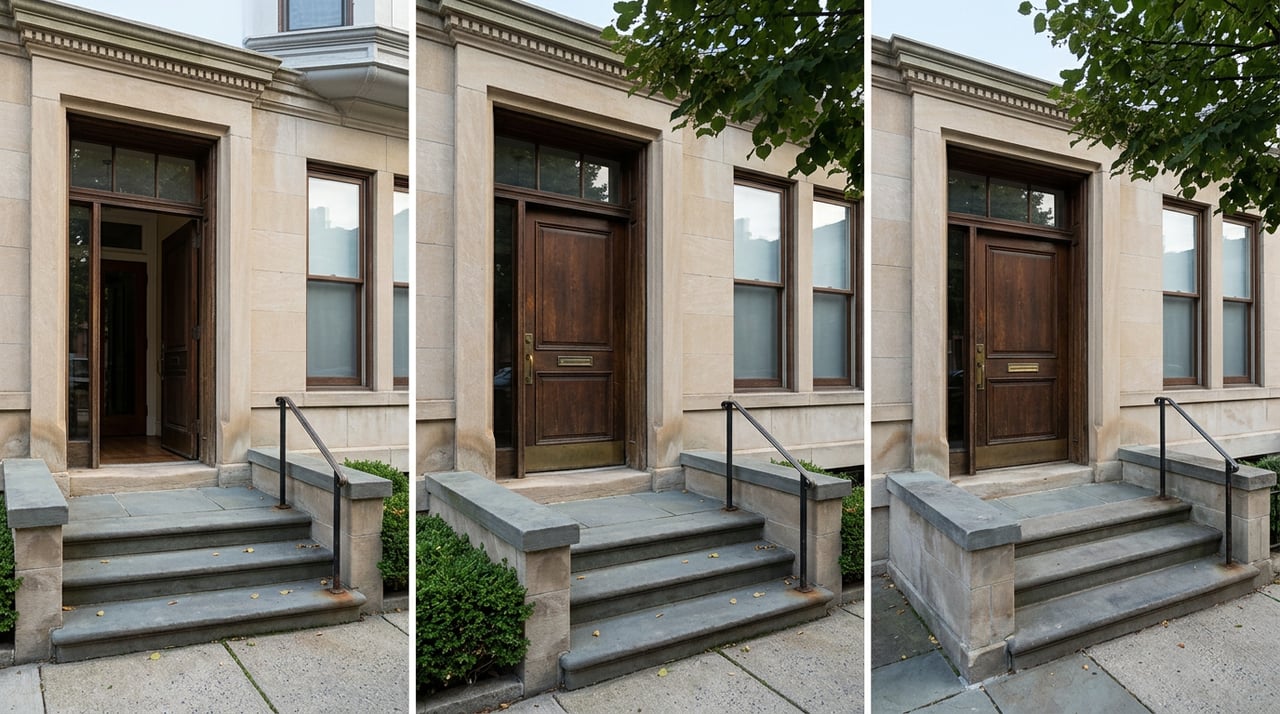
Walk one block in Prospect Heights and you can cross from a house where the exterior brick, window sashes, and roofline are locked under Landmarks Preservation Commission review into a house next door where none of that applies. The Prospect Heights Historic District does not follow the neighborhood's street grid. It was drawn block by block, sometimes splitting a single row of houses down the middle, so two nearly identical brownstones facing each other across a stoop can carry completely different renovation rules and completely different price assumptions. A buyer comparing listings by block or by square footage alone will miss that split every time.
That same kind of quiet asymmetry runs through the bigger question buyers ask when they set Prospect Heights against Park Slope: why does one cost noticeably more than the other, and is the gap something to plan around or something to ignore. The honest answer is that the gap on your screen right now is measuring at least three different things at once, and only one of them has anything to do with which neighborhood is actually better.
The number everyone starts with
The comparison usually begins with a home value index. As of March 31, 2026, Park Slope's index sat at $1,570,152 against $1,279,783 in Prospect Heights, a spread of roughly 18.5%. Rents tell a much quieter story. Median asking rent in April 2026 was $4,325 in Park Slope and $4,225 in Prospect Heights, a gap of about 2%. If Prospect Heights were simply a lesser version of Park Slope, you would expect the rental market, where tenants are pricing in daily life rather than long-term appreciation, to show a similar spread. It doesn't. That mismatch is the first sign that the sale-price gap is doing more work than a simple quality difference would require.
What thirty to ninety days of closings actually show
Home value indexes smooth data over rolling periods. Actual closings do not, and Prospect Heights sells too few homes for that smoothing to hide much.
| Window | Reported median | Year-over-year change | Sales counted |
|---|---|---|---|
| April 2026 (month) | $1.6M | +64.7% | 16 |
| Q2 2026 (quarter) | $1,587,500 | +53% | not separately reported |
| March 2026 (Redfin, 3-month trailing) | $1.5M | +34.3% | 40 |
Three separate readings, all covering overlapping months of the same year, produce three different year-over-year swings ranging from 34% to nearly 65%. That is not a market repricing itself in real time. It is a market small enough that a handful of closings, particularly high-value ones, can drag the median wherever they land. Park Slope, by contrast, recorded 99 deals in the same Q2 2026 window at a median of $1.8M, up a comparatively tame 21.3% year-over-year. More transactions produce a steadier number. Prospect Heights simply doesn't have the closing volume to make its median trustworthy month to month, and a ten-year average of roughly 288 active listings a year confirms how thin the inventory pool is.
If you are watching the gap narrow or widen from one quarter's headlines to the next, you are mostly watching sample size, not sentiment.
The mix problem hiding inside the median
Volume isn't the only thing distorting the number. What actually closes matters as much as how many transactions closed. Across Prospect Heights, condos trade at roughly a 20% premium over co-ops, largely because co-op boards impose financing and approval restrictions that condos don't, which narrows the buyer pool for co-ops and widens it for condos. The same PropertyShark data that showed the median swinging wildly also broke it out by product type: co-op sale prices in Prospect Heights rose 81.7% year-over-year in one recent period while condo prices sat flat. That is not the neighborhood repricing. That is simply a quarter where more expensive co-ops happened to close relative to condos, or vice versa.
Park Slope's housing stock is more uniform, brownstones and rowhouses dominate the market end to end, which is part of why its median moves in a narrower band. Prospect Heights mixes prewar co-ops, condops, new-construction condos, and single-family brownstones inside the same few blocks. Compare a listing in one neighborhood against a listing in the other and you are rarely comparing the same kind of product, even when the addresses sit ten minutes apart.
The supply nobody has priced in yet
The clearest reason the gap may not hold its current shape has nothing to do with what's already sold. It's what's about to be built.
In 2025, the New York City Council approved the Atlantic Avenue Mixed-Use Plan, a rezoning covering roughly 21 blocks along Atlantic Avenue running from Vanderbilt Avenue in Prospect Heights east to Nostrand Avenue at the Crown Heights and Bedford-Stuyvesant line. The plan allows buildings up to 185 feet, close to 18 stories, in parts of that corridor, replacing what had largely been low-rise industrial zoning. City projections put the total at about 4,600 new homes, including roughly 1,900 permanently affordable units, alongside more than $200 million in public investment for infrastructure and community programs.
Councilmember Crystal Hudson, whose district covers much of the rezoning area, called it the culmination of more than a decade of advocacy from local residents.
The corridor's western end sits right at Prospect Heights' doorstep. In April 2026, a joint venture of Avery Hall Investments, the Brodsky Organization, and Monadnock Construction closed on an assemblage at 962 Pacific Street and 863 Dean Street, sitting directly on the Prospect Heights and Crown Heights border and squarely inside the rezoning footprint. The 863 Dean Street lot alone, 16,500 square feet, sold for $16 million after drawing more than 15 offers in a single month, a sign of how much developer appetite the new zoning has already unlocked. Further east along the same corridor, a 17-story building called Prosper Brooklyn at 1042 Atlantic Avenue was nearing completion as of June 2026, with 193 rental units and 65 set aside as affordable, giving a preview of what the finished product along this stretch will look like.
Park Slope has no comparable rezoning in progress. Its housing stock is effectively fixed by its landmark protections and built-out avenues. Prospect Heights, sitting at the edge of a corridor about to absorb thousands of new units, is heading into a supply shift that Park Slope simply isn't. That alone should make anyone comfortable extrapolating today's 18.5% gap into next year's decision pause. New condo inventory landing at scale tends to pull a thin-market median in ways that have nothing to do with how buyers feel about tree cover or brownstone stock.
What this means if you're actually choosing between the two
None of this argues that Prospect Heights is secretly the same neighborhood as Park Slope at a discount, or that the gap is fake. It argues that the gap you see quoted on any given day is a blend of a real, durable difference in housing stock and streetscape, a temporary distortion from thin transaction volume, and a compositional effect from whichever product type happened to close recently, layered on top of a supply pipeline that is about to change the equation from the Prospect Heights side only.
If you're comparing two specific listings, ask what actually closed nearby in the last 60 to 90 days, not what the neighborhood-wide median says this month, and ask whether the comparable was a co-op, a condo, or a brownstone, since in Prospect Heights that distinction alone can explain a six-figure swing. If you're timing a purchase against financing costs, current conditions are worth knowing regardless of which of the two neighborhoods you land in. The 30-year fixed mortgage rate averaged 6.66% as of August 27, 2026, according to Freddie Mac's weekly survey, up slightly from the week before and a year earlier.
A few direct questions
Is Prospect Heights actually cheaper than Park Slope, or does it just look that way? Both. The home value indexes show a real and fairly consistent 18.5% gap as of March 2026. But Prospect Heights' own reported median has moved by 30 to 65 percentage points year-over-year depending on the exact month and data source, which means any single snapshot of the gap should be treated as a range, not a fixed number.
Will the Atlantic Avenue construction actually affect prices, or is that years away? Construction is already underway on the corridor, with one building nearing completion in mid-2026 and a newly assembled site entering the pipeline that same spring. The full 4,600-unit build-out will take years, but the supply and construction activity are current, not speculative.
Does the co-op versus condo split matter if I'm only looking at one property type? It matters even then, because it affects what comparable sales actually tell you. A condo comp in Prospect Heights will typically run above a co-op comp for a similar unit, so pulling the wrong comps can make either neighborhood look more or less expensive than it is.
If you're weighing a purchase between these two blocks of Brooklyn and want a clearer read on what a specific listing's comps actually support, the Greg Mire Team is available to request a confidential consultation.